
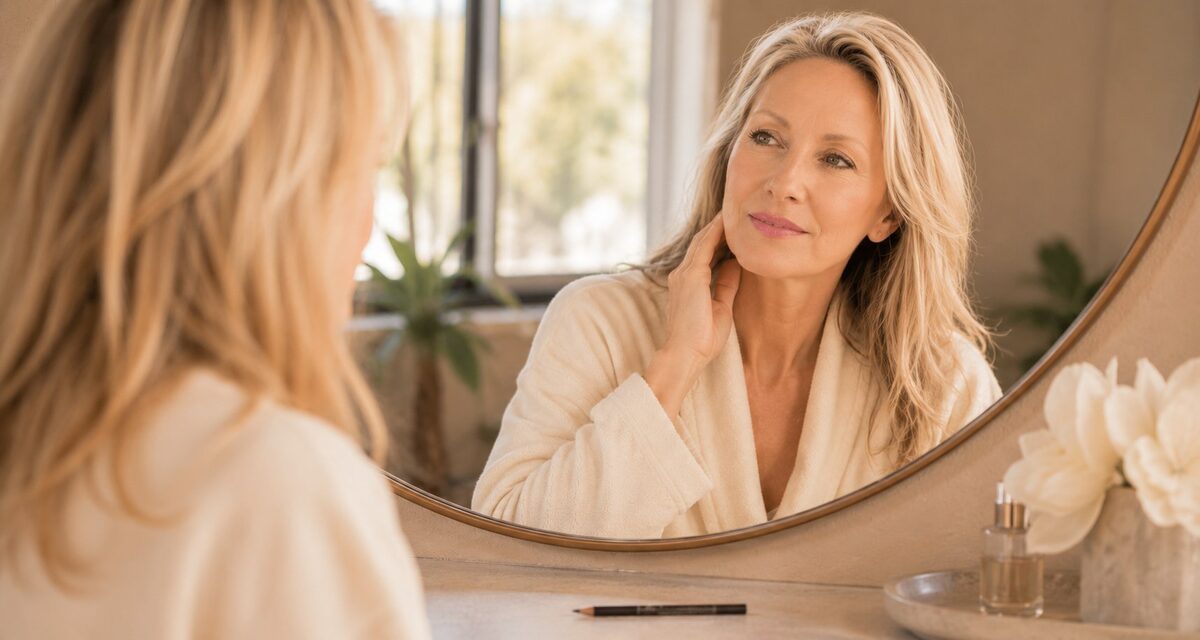
You've done the research. You know you want permanent brows. And then you hit the question that stops almost everyone in their tracks:
Microblading, nano brows, or powder brows — what's actually the difference, and how do you know which one is right for your skin?
The internet is full of opinions, overlapping terms, and before-and-afters that all look stunning — at least in the photos. So how do you actually decide? And more importantly, how do you make sure you're choosing the technique that will work for your skin, your lifestyle, and the result you actually want to live with for the next two to four years?
So let's walk through all three — what they are, how they're different, and which one tends to work best for which kind of skin and lifestyle. By the end, you'll know exactly what to ask when you sit down for a consultation.
The Three Techniques — What They Actually Are
All three are forms of permanent makeup. All three deposit pigment into the skin. All three create fuller, more defined brows that last for years. That's where the similarities end.
Microblading uses a handheld manual tool with a row of tiny needles to make fine, shallow cuts in the skin, depositing pigment into each stroke as it goes. The goal is to mimic individual brow hairs — up close, each stroke looks remarkably like a real hair. It's been around longest and gets the most attention, but it comes with real limitations we'll talk about honestly below.
Nano brows — also called nano hairstrokes or machine hairstrokes — achieve a similar hair-stroke look to microblading, but use a digital machine instead of a manual blade. A single, ultra-fine needle implants pigment in precise, controlled strokes. Because a machine delivers each stroke with consistent depth and pressure, the results tend to be crisper, more uniform, and more predictable than manual microblading — especially on skin that microblading struggles with.
Powder brows use a machine to deposit pigment in a soft, stippled pattern across the brow — more like the look of brow powder applied by a very skilled hand. The finish is soft, diffused, and dimensional. Not a hair-stroke effect, but beautifully filled-in brows that read as completely natural from any distance.
The difference between these techniques matters enormously depending on your skin type, your age, and what you actually want your brows to look like day to day.
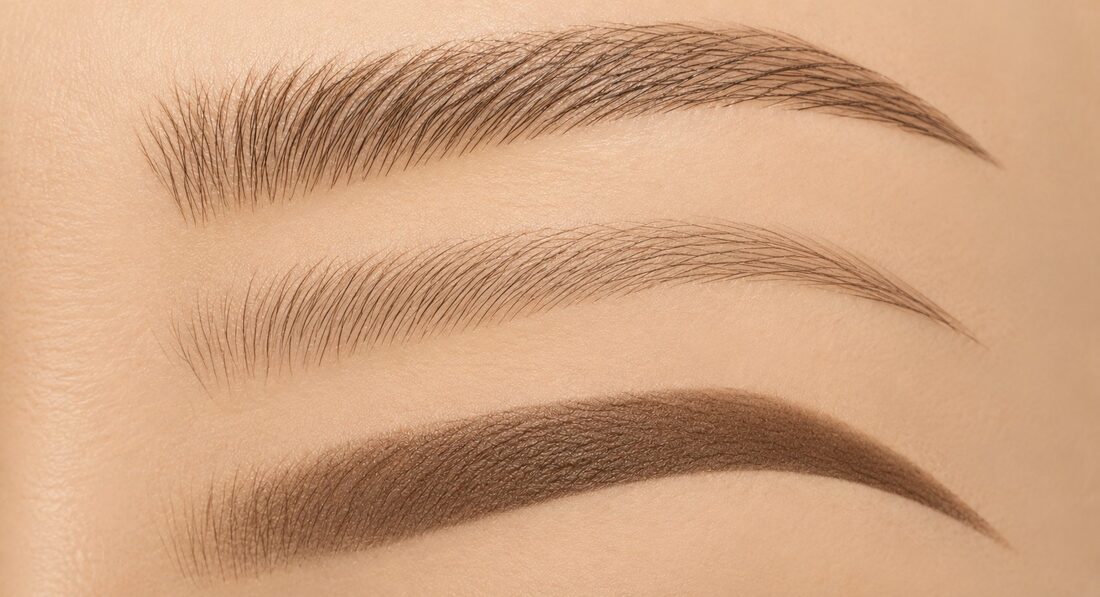
Top to bottom: microblading hair strokes, nano hairstrokes, powder brow fill. Three looks — three very different techniques.
The Honest Truth About Microblading
Of the three techniques, microblading gets the most attention — and when it works, it's genuinely beautiful. On the right skin, with a skilled artist, microblading can produce results that look completely indistinguishable from real brow hair. That's no small thing.
But microblading has real limitations that don't always make it into the marketing.
It depends heavily on skin type. Microblading works best on dry to normal skin that's in good condition — skin that holds a crisp edge well. On oily skin, the strokes can spread and blur as they heal, producing a soft, undefined result instead of the crisp hair strokes you were shown in photos. On mature, thin, or delicate skin, the same thing can happen — the skin doesn't always grip the pigment the way it needs to for the strokes to stay sharp.
It tends to fade faster. Because the cuts are shallow, microblading pigment fades more quickly than powder brows in many skin types — often requiring touch-ups every 12 to 18 months rather than every two to four years.
It requires more maintenance over time. Each touch-up adds another layer of work to the skin. For some people, this is fine. For others — particularly those with skin that doesn't hold microblading well — repeated sessions can create buildup that's harder to work with over time.
None of this makes microblading a bad technique. It makes it a technique with a specific ideal candidate. And if you're not that candidate, powder brows will almost certainly serve you better.
Where Nano Brows Change Everything
Nano brows were developed specifically to address microblading's biggest weakness: inconsistency across different skin types. And they do that remarkably well.
Because a machine controls the depth and speed of every single stroke, nano brows produce hair strokes that are sharper, more even, and more durable than manual microblading — particularly on skin types where microblading tends to blur or fade. The ultra-fine needle creates less trauma to the skin, which means the healing process is often smoother and the pigment retention is better.
For women who specifically want a hair-stroke effect — that natural, individual-hair look — but whose skin type isn't ideal for microblading, nano brows are often the answer. They sit in between microblading and powder brows on the spectrum: they give you the hair-stroke aesthetic, but with the reliability and precision of a machine.
Nano brows still work best on normal to slightly oily skin. They're more forgiving than microblading on mature skin, but powder brows remain the most reliable choice for skin that's significantly thin, delicate, or very oily. If you're over 50 and want a hair-stroke look, nano brows are worth discussing — but the conversation needs to include an honest look at your skin.
At our Tempe studio, nano hairstrokes are one of our most requested techniques. It's detailed, precise work — and when it's right for a client, the results are some of the most natural-looking brows we create.
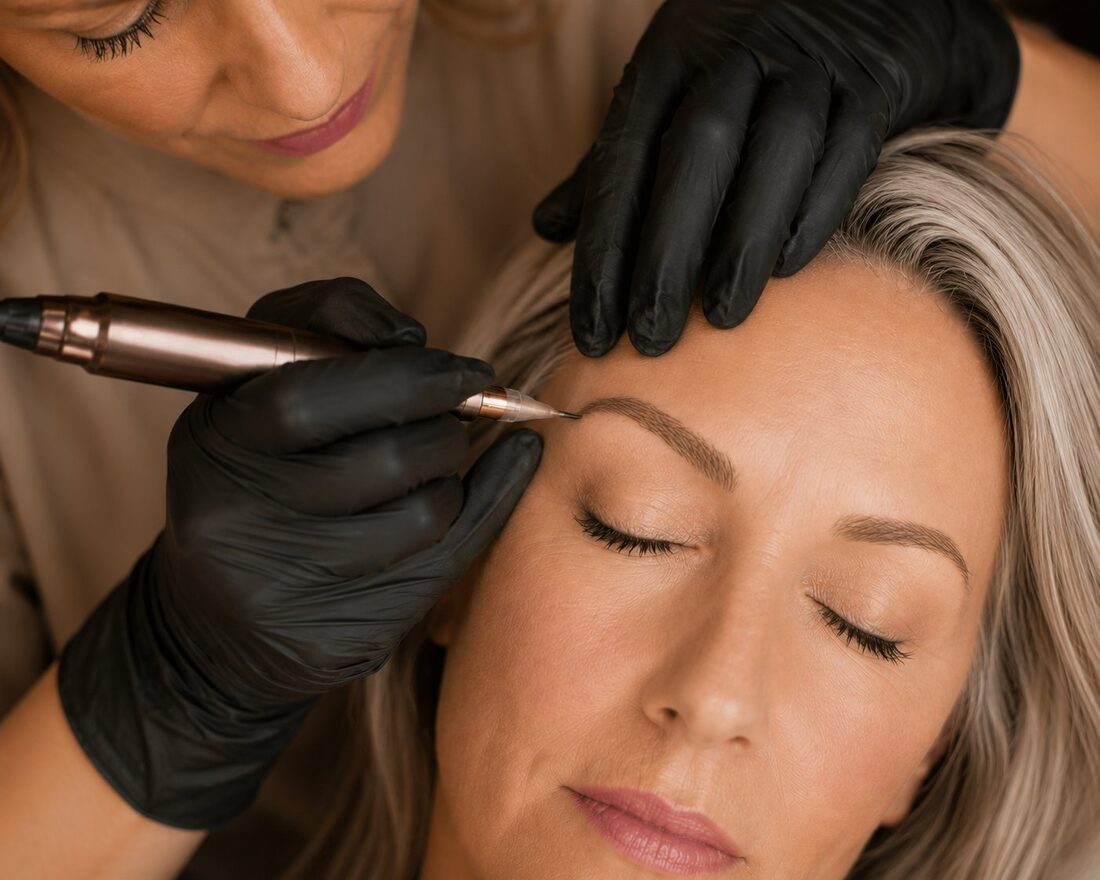
Nano hairstrokes: a single ultra-fine machine needle, consistent depth, precise results on every stroke.
Why Powder Brows Are Often the Smarter Choice
Powder brows don't get the same aesthetic wow factor as microblading in the Instagram era — partly because \"hair strokes\" photograph beautifully up close, and partly because the powder brow look is softer and more subtle by nature. But when it comes to real-world wearability, longevity, and suitability across a wider range of skin types, powder brows win on almost every measure.
They work on virtually all skin types. Oily skin, dry skin, mature skin, thin skin — powder brows hold up reliably across the board. The stippling technique doesn't depend on crisp edges the way microblading does, so the results are more consistent and more predictable.
They last longer. Most powder brow clients come in for a color refresh every two to three years. Some go longer. The pigment fades more gradually and more evenly than microblading, which means you're not watching your investment fade in six months and wondering if you did something wrong.
They age better on skin. As skin changes over the years — becoming thinner, drier, or more textured — powder brows continue to look soft and natural. Microblading that's been touched up multiple times on aging skin can sometimes start to look muddy or over-worked. Powder brows don't carry that risk to the same degree.
They're the better choice for most women over 40. If you're in your 40s, 50s, or 60s — which describes the majority of the women who come into our Tempe studio — powder brows are almost always the right answer. Not because microblading isn't beautiful — it is — but because the skin changes that come with age, menopause, and hormonal shifts tend to make powder brows the more reliable, more flattering, and more long-lasting result.
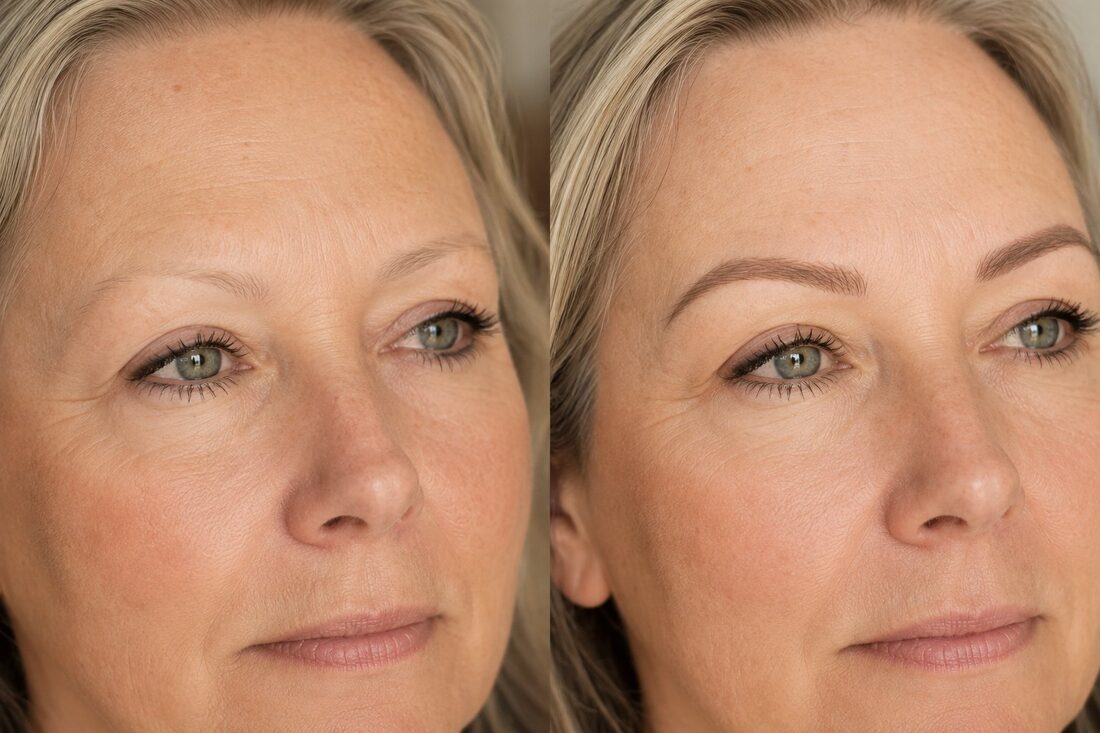
Before and after — the same woman, naturally lit. The result looks like her best brows, not like makeup.
Side by Side: The Real Comparison
Here's how microblading vs powder brows vs nano brows actually stack up across the factors that matter most — skin type, longevity, healing, and long-term results.
| Factor | Microblading | Nano Brows | Powder Brows |
|---|---|---|---|
| Look | Individual hair strokes, manual | Individual hair strokes, machine-precise | Soft, powdery fill — natural at any distance |
| Tool used | Manual hand blade | Digital machine, single needle | Digital machine, stippling technique |
| Best skin type | Dry to normal only | Normal to slightly oily | All skin types — oily, mature, thin |
| Longevity | 12–18 months | 18 months – 2 years | 2–4 years |
| Best for age | Under 40, stable skin | 30s–50s, good skin condition | All ages, especially 40+ |
| Oily skin? | Blurs and fades quickly | More reliable than microblading | Holds very well |
| Fading | Can blur and fade unevenly | Fades more evenly than microblading | Fades gradually and evenly |
| Correction risk | Higher — strokes can migrate | Moderate | Lower — most forgiving over time |
| Comfort level | Manual blade — can feel more intense | Machine — gentle, consistent | Machine — most clients find it comfortable |
| Ideal for | Young, dry skin wanting hair strokes | Hair-stroke look with more reliability | Maximum longevity, all skin types |
What About Combination Brows?
You may have also come across the term "combination brows" — and it's worth understanding what that means, because there are now two versions of it.
Classic combination brows blend microblading hair strokes at the front of the brow with a powder fill through the body and tail. When done well on the right candidate, this can offer the best of both — a natural, hair-like front with the staying power and definition of powder through the rest of the brow.
Nano combination brows — which is what we offer at Kiss Kreations — do the same thing, but use machine hairstrokes (nano) at the front instead of manual microblading. The result is just as natural-looking, but with the precision, reliability, and gentler healing that machine work provides. For most clients who want the combination look, nano combination is the better-performing version.
Both combination approaches work best when the client has some natural brow hair to blend with, and skin that's in reasonable condition. If you're unsure which version makes sense for you, that's exactly what a consultation is for.
How to Know Which One Is Right for You
Here's the honest answer: you may not be able to tell just from reading this. And that's okay — because this is exactly what a proper in-person consultation is designed to answer.
A skilled artist will look at your skin type, your existing brow hair, the texture and condition of your skin, your age, any hormonal factors that might affect healing, and what you actually want your brows to look like day to day. Based on all of that, they'll give you a clear, honest recommendation — not a sales pitch for whatever they happen to prefer doing.
At Kiss Kreations, we offer all four options: powder brows, nano hairstrokes, nano combination brows, and classic combination brows. We have no technique preference — we have a preference for the result that's going to serve you best. Which is why our consultations start with a real conversation, not a predetermined plan.
Powder brows are almost always the right call if: You're over 50. Your skin tends to run oily. Your skin is thin or delicate. You've had microblading that didn't hold well. You want the longest-lasting result with the least maintenance. You prefer a soft, filled-in look over individual hair strokes.
Nano brows or nano combination are worth discussing if: You specifically love the hair-stroke aesthetic and want brows that look as close to real hair as possible. Your skin is in good condition and isn't very oily. You're in your 30s to early 50s and don't have significant skin texture concerns. You understand that hair-stroke work, even with a machine, requires more maintenance than powder.
Microblading may still be an option if: You're younger with dry to normal skin and you've consulted with an experienced artist who has assessed your skin and confirmed you're a good candidate. That said — for most clients who want the hair-stroke look, nano brows deliver a better, more reliable version of exactly the same result.
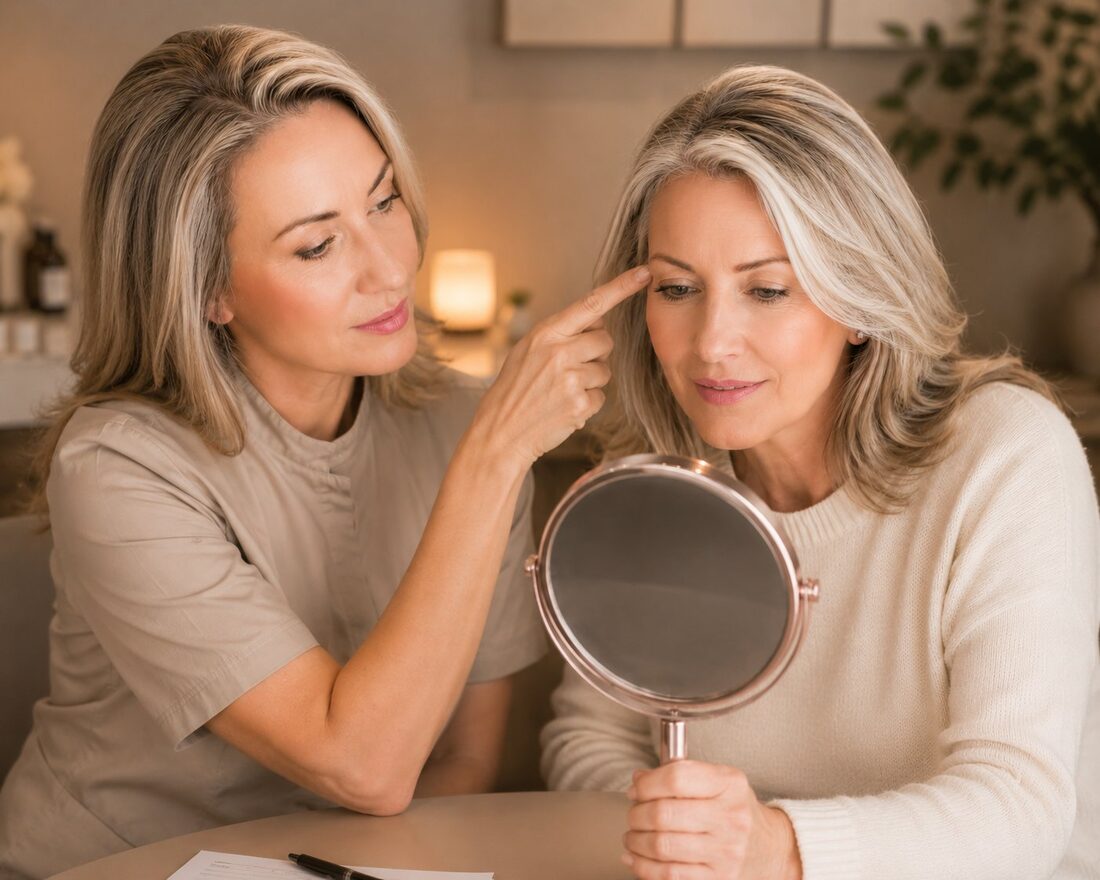
Every consultation starts here — looking at your actual skin together and building a plan that makes sense for you.
A Client Story
Karen came to our Tempe studio at 54 after having microblading done elsewhere two years earlier. The photos she'd been shown were stunning — fine, hair-like strokes that looked completely real. Her own results were different. By the time they healed, the strokes had blurred into soft, undefined smudges. By six months, they'd faded unevenly, leaving patches of pigment that didn't quite connect.
She'd gone back for a touch-up. It helped briefly, then faded the same way. She'd started filling them in again almost immediately. She felt like she'd wasted her money and her trust.
At her consultation with us, we looked at her skin type — naturally oily in the brow area, with some texture from the repeated microblading sessions. We talked honestly about what had happened and why, and we recommended powder brows over the existing work.
Her healed results were exactly what she'd been hoping for since the beginning: soft, full, natural-looking brows that held their color and shape. She texted us at her six-week mark: "These are still perfect. Why didn't anyone tell me this was the right technique for me the first time?"
That's a question we hear more than we'd like. Which is why we wrote this.
Frequently Asked Questions
Can I get powder brows if I've already had microblading?
In many cases, yes — but it depends on how much pigment is still in the skin and what condition it's in. In some cases, powder brows can be applied over faded microblading to refresh and improve the result. In others, some lightening or removal may be needed first to create a clean base. The only way to know is an in-person assessment, where we can look at the existing work and give you an honest picture of your options.
Is microblading bad? Should I avoid it entirely?
Not at all. Microblading is a legitimate technique that produces beautiful results on the right candidate. The problem isn't the technique — it's when it's applied to skin types or ages where it's less likely to hold well, without that being disclosed upfront. If you're a good microblading candidate — younger skin, dry to normal, specific hair-stroke aesthetic preference — it can be a wonderful choice. The key is an honest consultation with someone who will recommend what's genuinely right for your skin, not just what they prefer to do.
Which lasts longer — microblading or powder brows?
Powder brows typically last significantly longer — two to four years compared to twelve to eighteen months for microblading on average. Powder brows also tend to fade more evenly and gradually, which means less maintenance and more consistent results between appointments.
Are powder brows good for oily skin?
Yes — powder brows are one of the best options for oily skin. Where microblading can blur and fade quickly on oily skin, the stippling technique used for powder brows holds up much more reliably. If you have oily skin and you've been told you're not a good candidate for permanent brows in general, that's almost certainly not true — powder brows were essentially designed for skin types that microblading struggles with.
What are nano brows and how are they different from microblading?
Nano brows achieve the same hair-stroke look as microblading, but use a digital machine with a single ultra-fine needle instead of a manual blade. The machine controls depth, pressure, and speed with precision that a hand tool simply can't match — which means crisper strokes, more even results, and better pigment retention across a wider range of skin types. For clients who want the hair-stroke aesthetic, nano brows typically outperform microblading in durability and consistency, especially on skin that isn't perfectly dry and young.
What's the difference between powder brows and ombré brows?
They're the same technique with different names. \"Ombré brows\" refers to the gradient effect that's naturally created by the powder brow technique — lighter and softer at the front of the brow, gradually deeper and more defined toward the tail. Some artists use one term, some use the other. If you're seeing both in your research, they're describing the same result.
Do powder brows look natural?
When done well, absolutely. The soft, diffused finish of powder brows mimics the look of brow powder or shadow applied by a skilled hand — not a solid, drawn-on line. The goal is always to create a result that looks like your best natural brows, not like obvious makeup. Most people who see our healed results don't realize the brows are permanent makeup at all.
The Right Technique Makes All the Difference
The most important decision you'll make about permanent brows isn't which studio to go to. It's making sure the technique being used is actually right for your skin. With three distinct techniques and multiple combinations available, there's no one-size answer — and any artist who tells you otherwise before seeing your skin isn't giving you a real consultation.
Our studio is in Tempe, and we see women from all across the East Valley — Chandler, Gilbert, Mesa, Scottsdale, Queen Creek, Ahwatukee, and beyond. This is the conversation we have every single day in our consultations. Come in for a consultation and leave with a clear recommendation you can trust.